


THE PRINCE WILLIAM COUNTY FAMILY LAW GUIDE
Divorce and family law in Prince William County, from an attorney a few blocks from the courthouse.
I am Corrie Sirkin, a family law attorney and founding partner at NOVA Legal Professionals. Our Manassas office at 9071 Center Street sits a short walk from the Judicial Center where Prince William County family law cases are decided. This is the complete guide I wish every client had before their first call: separation, divorce, custody, support, property, and safety, chapter by chapter, in plain English.
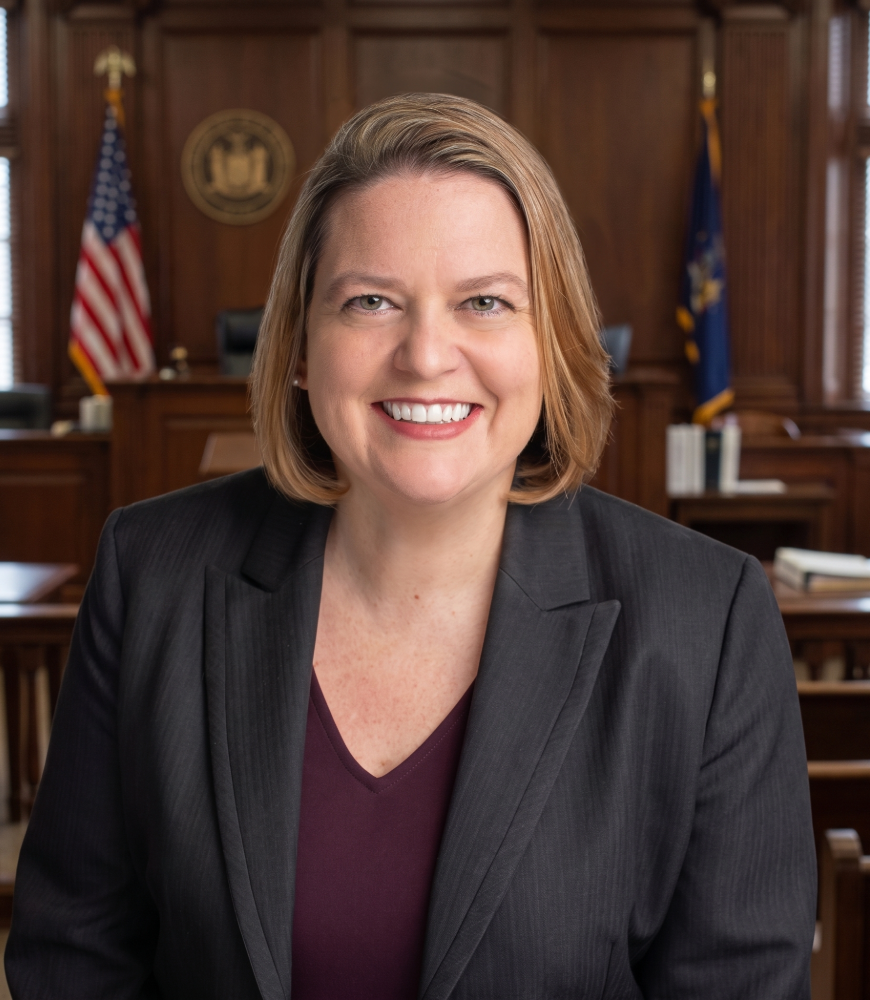 Corrie Sirkin, Esq. · Founding Partner, NOVA Legal Professionals · Manassas, Virginia
THE SHORT ANSWER
Looking for a divorce or family law attorney in Prince William County or Manassas?
Here is the answer: Prince William County family law runs through one building, the Judicial Center at 9311 Lee Avenue in Manassas, home to both the Circuit Court, which handles divorce, and the Juvenile and Domestic Relations District Court, which handles most custody, support, and protective order matters. The same courts serve the County and the independent Cities of Manassas and Manassas Park. Virginia requires one year of separation for a no fault divorce, or six months with a signed agreement and no minor children. NOVA Legal Professionals handles divorce, custody, support, property division, military divorce, prenuptial agreements, and protective orders from our office at 9071 Center Street in Old Town Manassas, a few blocks from that courthouse. Call us at 571 260 0999, and everything below is the longer, honest version.
What is in this guide
- Start here: how to use this guide
- One courthouse, three jurisdictions
- Separation on a commuter’s budget
- The three paths to divorce in Prince William
- Money while you wait: pendente lite relief
- Custody: what the judge in Manassas must weigh
- Parenting schedules in a county built on I-95
- Child support: the recipe behind the number
- When the paycheck changes: modifying support
- Spousal support and the commuter marriage
- Equitable distribution: sorting fifteen years into two piles
- The townhouse, the TSP, and the QDRO
- Military divorce: the Quantico chapter
- Prenuptial agreements and second chances
- When home is not safe: protective orders
- Writing your own ending: settlement agreements
- After the decree: finish the paperwork
- Working with us in Manassas
- Prince William questions I answer every week
Chapter One · Start here: how to use this guide.
Quick answer
Here is the answer: this guide walks through every major part of a Prince William County family law case, from the first hard conversation to the final decree at the Judicial Center in Manassas. Each chapter opens with a direct answer, then explains the law in plain English with the Virginia Code section behind it. Read it straight through, or jump to the chapter that matches the question keeping you up tonight.
Nobody bookmarks a page like this on a good day. If you found it, something has cracked, or is about to. Maybe you are in a Dale City townhouse lying awake next to someone who feels like a roommate. Maybe you are in a car on the Occoquan bridge, using the commute to rehearse a conversation you have put off for a year. Maybe the crack is not yours; maybe it is a sister in Woodbridge or a Marine buddy at Quantico, and you are the one they asked for help.
Whoever you are, here is what I can promise this guide will do. It will tell you how Virginia family law actually works, without the jargon wall that most legal writing hides behind. Every legal term gets translated into ordinary words the first time it appears. Every rule comes with its source in the Virginia Code, linked, so you can verify me instead of trusting me. And where the law is hard on your situation, I will say so in the first sentence, not the last, because you cannot plan around a truth someone is hiding from you.
What this guide will not do is know your facts. Prince William is a county of almost half a million people, and no two of their cases are the same. Treat these chapters as the map, and treat your own situation as the terrain. Maps are where journeys start, not where they end.
One note on the people you will meet in these pages. They are composites. The situations and the law are real; the names and identifying details have been changed or blended, because the families who sat in my office trusted me with their worst year, and that trust does not expire when the case closes.
When you are ready for a person instead of a page, we are a few blocks from the courthouse. Learn about our offices and the Northern Virginia communities we serve, or call 571 260 0999. The first call is a conversation, not a commitment.
Chapter Two · One courthouse, three jurisdictions.
Quick answer
Here is the answer: nearly all Prince William family law happens at the Judicial Center, 9311 Lee Avenue in Manassas. The Prince William County Circuit Court there hears divorces, and the Juvenile and Domestic Relations District Court, J&DR for short, hears most standalone custody, visitation, support, and protective order cases. The same courts serve the County and the independent Cities of Manassas and Manassas Park, so whether you live in Gainesville, Woodbridge, Dumfries, or downtown Manassas, your case lands in the same building.
Prince William confuses newcomers with its geography, and the confusion shows up in my office weekly. A client from Manassas Park asks whether her divorce belongs in some Manassas Park court. A husband in Woodbridge assumes there must be a courthouse on his side of the county, because surely nobody expects eastern Prince William to drive to Manassas. The answer to both is the same: one Judicial Center, on Lee Avenue in Old Town Manassas, serving the County of Prince William and the independent Cities of Manassas and Manassas Park together.
Inside that building, the work splits between two courts, and knowing which door your issue walks through saves real time. The Circuit Court hears divorce from filing through final decree, along with the property and support questions attached to a divorce. The J&DR District Court is where custody, visitation, and child support cases begin when no divorce is pending, and it is where protective orders are heard. When a custody case starts in J&DR and a divorce is later filed, the issues can move up to the Circuit Court so one judge sees the entire family instead of half of it.
Why does local matter if the law is statewide? Because a courthouse is not a statute; it is a working institution with its own calendar, its own procedures, and its own pace. Prince William’s docket is busy and moving through it smoothly is a craft you learn by being there, not by reading about it. Our Manassas office sits a few blocks away on Center Street, and that proximity is not a real estate accident. It is how we practice.
One more local truth this guide returns to again and again: Prince William is a commuter county with a military anchor. Tens of thousands of its residents earn their living somewhere else, up I-95 or I-66 or along the VRE lines, and Marine Corps Base Quantico anchors the county’s southern end. Commutes shape custody schedules. Federal and military pay shapes support. The chapters ahead are written for this county, not a generic one.
Sources: Prince William County Courts, Judicial Center, 9311 Lee Avenue, Manassas, VA 20110; Va. Code Title 20 generally. Verified as of July 2026.
Chapter Three · Separation on a commuter’s budget.
Quick answer
Here is the answer: Virginia has no court filing called legal separation. You are separated when you live separate and apart with at least one spouse intending it to be permanent, and under Virginia Code § 20-91 a no fault divorce requires one year of that separation, or six months with a signed agreement and no minor children. Virginia courts have recognized separation under one roof, which matters enormously in a county where two households on one commuter budget is often impossible, but proving it takes deliberate, documented steps.
Let me introduce a couple I will call the Riveras. Both worked north of the county line, him in Arlington, her near the Pentagon. Their townhouse near Potomac Mills carried a mortgage that made sense for two incomes and no sense at all for one. When the marriage ended in everything but paperwork, they did the math every Prince William couple does: rent for a second household along the I-95 corridor, plus the mortgage they already had, plus two commutes. The numbers said no. So they asked me the question I hear more in this county than almost any other: can we be separated while we still live in the same house?
Virginia’s answer is yes, carefully. Separation in this state is a fact, not a filing. It exists when spouses live separate and apart, and at least one of them intends the separation to be permanent. Courts have accepted that this can happen under a single roof, but the proof has to look like two lives, not one strained one: separate bedrooms, separate finances to the extent possible, no shared meals or errands as a couple, no presenting as married, and a clear, provable date when it began. The Riveras wrote a short signed statement fixing their date, moved him to the basement level, split the grocery runs, and told two trusted friends who could later confirm what they saw. It was not comfortable. It was valid.
The date they fixed did three jobs at once. It started the divorce clock under Virginia Code § 20-91: one year of separation for a no fault divorce, or six months where there are no minor children and a signed separation agreement exists. It marked the boundary that helps sort marital property from what each builds afterward. And it anchored every later negotiation, because in family law, vague dates become expensive arguments.
“In Prince William, separation is usually a budgeting problem before it is a legal one. The law can work with your budget, but only if you build the record deliberately.”
The stretch between separation and decree is also when the money questions bite hardest, and I want you to know two things now rather than later. Whose name is on a debt still owes that debt, separated or not, and I cover the details in who pays the bills during separation. And a court can order temporary support to hold the household steady while the case runs, which is the whole subject of chapter five.
Source: Va. Code § 20-91, law.lis.virginia.gov/vacode/20-91. Verified as of July 2026.
Chapter Four · The three paths to divorce in Prince William.
Quick answer
Here is the answer: every Prince William divorce travels one of three paths to the Circuit Court in Manassas. An uncontested no fault divorce, built on a signed agreement and the separation period, is the fastest and cheapest. A contested no fault divorce fights over custody, support, or property even though the grounds are simple. A fault based divorce, on grounds in Virginia Code § 20-91 such as adultery or cruelty, demands real proof and costs the most in money and months. Most families in this county finish on the first path, including many who started on the second.
Here is a pattern I have watched play out at the Judicial Center for years. Two people file angry. They spend months in discovery, which is the formal exchange of financial documents, learning exactly what litigation costs per question answered. Somewhere around the second round of legal bills, or the first time a child asks why everyone is sad, practicality walks into the room and sits down. The case settles. The decree that finally gets entered looks remarkably like the agreement they could have signed at the start, minus the savings account.
I tell you that story first because the choice of path is the biggest cost decision you will make, and it is more within your control than it feels right now. Path one, uncontested and no fault: you resolve property, debt, support, and the parenting plan in a written agreement, wait out the separation period, and file. The court’s role is largely review and entry. Path two, contested no fault: the grounds are simple but the issues are not, so the case runs through discovery, negotiation, often mediation, and, if needed, trial on the disputed pieces. Path three, fault: Virginia Code § 20-91 preserves fault grounds, including adultery, felony conviction with confinement, and cruelty. Fault must be proven with evidence, not suspicion, and adultery in particular carries a demanding standard. Fault can genuinely matter, especially around spousal support, but it should be a strategy, never a scream. I will also flag honestly that the 2026 General Assembly session changed parts of the fault framework, so if fault touches your case, get advice that is current to the week, not an article, including this one.
Which path is yours? Start with one honest question: what do you and your spouse actually disagree about, once the anger is set aside? If the answer is nothing much, do not let pride buy you path two. If the answer is the children or the money, path two exists for good reason and we walk it well. I wrote a shorter local overview at divorce in Prince William County, and our divorce practice pages go deeper on each route.
Source: Va. Code § 20-91. Verified as of July 2026; 2026 General Assembly amendments pending verification of effective text.
Chapter Five · Money while you wait: pendente lite relief.
Quick answer
Here is the answer: Virginia Code § 20-103 lets the court enter temporary orders while a case is pending, called pendente lite relief, Latin for pending the litigation. That can include temporary child support, temporary spousal support, health insurance coverage, temporary use of the home, and a contribution toward attorney fees. Hearings typically come within weeks of the request, and the relief generally reaches back to the filing, not to when the need began. If you need support, file early.
Think about what a year of separation costs in this county. A mortgage or rent along the Route 1 or Route 28 corridors. Daycare, if your children are small, at Northern Virginia prices. Gas and tolls and a VRE pass for the commute that pays for all of it. Now imagine facing that year after the household’s main paycheck moved out, and you begin to understand why pendente lite relief is, for many of my clients, the most urgent chapter in this entire guide.
The design of the remedy matches the urgency. Once a case is filed, either spouse can move for temporary orders, and the court can act on a focused, relatively brief hearing within weeks. The order is not a preview of who wins; it is scaffolding. It holds the family structure upright, the children fed, the insurance in force, the house payment made, while the permanent questions get answered properly. Virginia Code § 20-103 gives the court this power, and it includes something people in unequal marriages need to hear: the court can order one spouse to contribute to the other’s attorney fees, so the spouse who controlled the accounts cannot win by simply outlasting the one who did not.
The trap, and I will repeat it because it costs Prince William families real money every year, is waiting. Temporary support generally runs from when you asked the court, not from when your circumstances turned. The months you toughed it out are simply gone. If children are involved, my article on how soon child support can start in a Virginia divorce walks the timing in detail, but the headline is the same: sooner than you fear, if you file rather than endure.
Source: Va. Code § 20-103, law.lis.virginia.gov/vacode/20-103. Verified as of July 2026.
Chapter Six · Custody: what the judge in Manassas must weigh.
Quick answer
Here is the answer: Prince William custody cases are decided under the best interests of the child standard, and Virginia Code § 20-124.3 requires the judge to weigh ten specific factors, from the child’s age, needs, and bond with each parent, to the role each parent has played, to each parent’s willingness to support the child’s relationship with the other parent, to any history of family abuse. No factor wins alone. There is no preference for mothers over fathers, and no automatic 50/50 rule. Virginia Code § 20-124.2 also directs courts to assure the child frequent and continuing contact with both parents where appropriate.
A mother from Gainesville, I will call her Dana, once asked me the question every parent eventually asks, though most work up to it slowly. She asked it in the first five minutes: “What do I have to do to keep my kids?” I gave her the answer I will give you, and it starts by fixing the question. Virginia custody is not a prize one parent keeps and the other loses. It is an arrangement a judge must build around one measure only, the best interests of the child, and the legislature wrote out exactly what that measure means.
The ten factors in Virginia Code § 20-124.3 read, once translated, like a checklist for the whole ecosystem of a childhood. The age and physical and mental condition of the child, and of each parent. The relationship the child actually has with each of you, not the one described in arguments. The child’s needs, including the sibling and friend relationships that anchor a kid’s world. The role each parent has played in raising the child so far, and the role each will play ahead. The child’s own reasonable preference, if the child has the age and maturity for it, weighed as one factor among ten rather than a deciding vote. Any history of family abuse, weighed heavily. And a factor parents constantly underestimate: each parent’s demonstrated willingness to support the child’s contact and relationship with the other parent.
Sit with that last one, because it changed how Dana ran her case, and it may change how you run yours. Judges at the Judicial Center have seen every flavor of parental gatekeeping, the blocked calls, the schedule games, the child quietly recruited as a messenger, and the statute tells them to hold it against the parent doing it. The strongest custody evidence you can build costs nothing: be the parent who makes the other parent’s relationship with your child easier, and keep the receipts. The texts offering makeup time. The calendar of exchanges you never missed. Character shows up in records.
Two more anchors for anxious nights. Legal custody, the authority over major decisions like education and medical care, is separate from physical custody, where the child lives day to day, and Virginia courts routinely award joint legal custody even where physical time is uneven. And no Virginia statute lets a child of any age simply pick a house; the preference factor is real but bounded. I wrote a complete plain English tour of all ten best interests factors, and our child custody pages cover the harder terrain, from emergency custody to relocation.
Sources: Va. Code § 20-124.3, law.lis.virginia.gov/vacode/20-124.3; Va. Code § 20-124.2. Verified as of July 2026.
Chapter Seven · Parenting schedules in a county built on I-95.
Quick answer
Here is the answer: Virginia has no automatic 50/50 schedule; the arrangement must fit the child’s best interests. In Prince William, geography does as much work as law. Equal schedules like week on week off, 2-2-3, and 3-4-4-3 succeed when parents live close enough for one school and survivable commutes, and they fail when the plan ignores I-95, Route 66, and the VRE timetable. The overnight count also feeds child support: crossing the 91 day line moves the case to the shared custody formula under Virginia Code § 20-108.2.
Prince William is one county with two coasts. There is the eastern side, Woodbridge, Lake Ridge, Dale City, Dumfries, living along the I-95 spine, and the western side, Manassas, Bristow, Gainesville, Haymarket, living along Route 66 and Route 28. On a map they are neighbors. At 5:15 on a Tuesday they are different time zones. I have watched parents agree to a beautiful equal schedule on paper, one home near Potomac Mills and the other past Gainesville, and then watched the schedule die in traffic within a semester, one exhausted child at a time.
So when I design schedules for this county, I start with the commute, not the calendar. The classic patterns are all available. Week on, week off means one handoff a week and long stable stretches, well suited to older kids and to parents who live far enough apart that midweek exchanges are cruel. 2-2-3 gives young children short gaps between seeing each parent, at the price of several exchanges a week, which only works when the homes are close and the parents are civil. 3-4-4-3 is the steady middle rhythm many school age families land on. And plenty of the best Prince William schedules are not equal at all: a primary home in the school pyramid, generous weekends, a midweek dinner where the drive allows, and big honest blocks in the summer. If summer time is your pressure point, my partner wrote a practical guide to summer visitation schedules that pairs well with this chapter.
Whatever the pattern, three design rules keep a Prince William schedule alive. Build exchanges around fixed points that already exist, school pickup and dropoff being the best, so the child, not the traffic, sets the rhythm. Write the schedule in dates and times, never in vibes; “reasonable and flexible” is how parents end up litigating Thanksgiving. And run the support math before you sign, because the overnight count is not just parenting, it is arithmetic. More than 90 days a year with the lesser time parent moves the case to Virginia’s shared custody support formula, and I have seen a single alternating weekend swing that line. Our page on shared and 50/50 schedules and the wider visitation library take each pattern apart in detail.
Sources: Va. Code §§ 20-124.2, 20-124.3; Va. Code § 20-108.2 (shared custody threshold). Verified as of July 2026.
Chapter Eight · Child support: the recipe behind the number.
Quick answer
Here is the answer: Virginia child support comes from the guideline formula in Virginia Code § 20-108.2. It combines both parents’ gross incomes, applies the statutory schedule for the number of children, adds the child’s share of health insurance and work related childcare, then divides the result between the parents in proportion to income. Past the 90 day overnight threshold, the shared custody version of the formula applies. The guideline number is presumptive; a judge can deviate from it only with written reasons.
I like to tell clients that Virginia child support is a recipe, because a recipe is exactly what it is, and knowing that changes how you fight about it. Nobody argues with a cake about whether it should exist. They argue about the ingredients. Support works the same way: the formula in Virginia Code § 20-108.2 is fixed, and nearly every real dispute in a Prince William support case is a dispute about what goes into it.
Ingredient one is gross income, defined broadly: wages, overtime, bonuses, commissions, self employment income, and, for the military families of chapter thirteen, allowances like BAH and BAS. The most common fight here is imputation, which means the court assigning income to a parent who is voluntarily earning less than they could, because the guideline is not a reward for quitting. Ingredient two is the child’s portion of the health insurance premium, credited to whichever parent carries the coverage. Ingredient three is work related childcare, the daycare and after school care that let a parent hold a job, and in this county that ingredient is enormous; there are Woodbridge and Bristow families whose childcare line rivals their housing line. Casual babysitting does not count. The daycare that makes the commute possible does.
Mix the ingredients, apply the schedule, divide by income share, and you have the presumptive number. Then the overnight count from chapter seven does its quiet work: more than 90 days a year with the lesser time parent switches the case to the shared custody formula, which accounts for two households genuinely running a home. Judges can deviate from the guideline for reasons the statute lists, a child’s special needs among them, but the deviation must be explained in writing, and in practice most numbers entered at the Judicial Center are guideline numbers built from documented inputs. Which is your practical homework in one sentence: bring pay stubs, the insurance breakdown, and the daycare invoices, because the parent with documents beats the parent with estimates. Our child support pages unpack every ingredient, including health insurance premiums and work related childcare.
Source: Va. Code § 20-108.2, law.lis.virginia.gov/vacode/20-108.2. Verified as of July 2026.
Chapter Nine · When the paycheck changes: modifying support.
Quick answer
Here is the answer: a Virginia support order can be changed after a material change in circumstances, meaning a real shift such as a job loss, a significant income change, or a schedule change that crosses the 91 day line. Under Virginia Code § 20-108, the modification generally reaches back only to the date the petition was filed and served. Support that came due before you filed stays owed in full and survives as arrears. The protective move is always the same: file the week your circumstances change.
A client I will call Teresa managed a store at Potomac Mills until the store stopped existing. Retail does that now. She was the receiving parent, not the paying one, and her question was the mirror image of the one most people expect in this chapter: her ex’s income had risen sharply since their order was entered years ago, the kids were older and more expensive, and she wanted to know whether the number could catch up to reality. It could, and it did, but only from the day she filed. The years of higher income before that petition were simply gone, the same way months of overpayment vanish for a paying parent who loses a job and files late.
That is the whole cruel symmetry of Virginia Code § 20-108 in one story. Support orders do not update themselves. They run at the entered amount until a court changes them, the change requires a material change in circumstances since the last order, and the new number reaches back only to the filing and service of the petition. It works identically in both directions. The paying parent who waits six months after a layoff owes six months at the old amount, accumulating as arrears, which is past due support that does not expire. The receiving parent who waits three years to address a doubled income has donated three years of difference.
What qualifies as material? Real income shifts up or down, a job loss, a custody schedule crossing the 91 day line, meaningful changes in insurance or childcare costs, a child aging off a multi child order. What usually fails: a temporary dip a parent could bridge, ordinary fluctuation, or the bare passage of time. And a warning I give every paying parent in this county, especially the contractors whose income moves with the award cycle: never simply reduce payments on your own while you wait for a hearing. Self help builds arrears and burns credibility, two things you cannot buy back.
“The statute does not ask when life changed. It asks when you told the court. Those are different dates, and the gap between them is money.”
Everything in this chapter, including what evidence actually carries a modification at the Judicial Center, lives in longer form on our support modification page.
Source: Va. Code § 20-108, law.lis.virginia.gov/vacode/20-108. Verified as of July 2026.
Chapter Ten · Spousal support and the commuter marriage.
Quick answer
Here is the answer: Virginia has no formula for a final spousal support award. Virginia Code § 20-107.1 directs the court through factors that include the length of the marriage, the standard of living during it, each spouse’s earning capacity, age and health, the career and family decisions the couple made together, and the monetary and non monetary contributions of each spouse. Awards can run for a defined period, for an indefinite duration in longer marriages, or be waived by agreement. Fault, especially adultery, can affect eligibility, so get case specific advice if fault is in play.
Prince William runs on a particular kind of marriage, and I have represented both halves of it. One spouse rides I-95 or the VRE north every morning to the job with the salary, the clearance, the trajectory. The other spouse absorbs everything the commute displaces: the school pickups, the sick days, the practices, the household logistics that make the commuter’s career physically possible. It works as a partnership for years. Then the marriage ends, and the commuter’s career walks out the door intact while the home spouse discovers their resume has a decade shaped hole where the family used to be.
Spousal support, what most people call alimony, is Virginia’s answer to that arithmetic, and the statute is more honest about marriage than most people expect law to be. Virginia Code § 20-107.1 makes the court weigh not just each spouse’s income today, but the standard of living the marriage established, its duration, each spouse’s realistic earning capacity and what retraining would take, the decisions the couple made together about careers and parenting, and, explicitly, the non monetary contributions each spouse made to the family’s wellbeing. The years spent making the commute possible are in the statute by name. They are contribution, not charity.
Duration tracks the same logic. A shorter marriage with a modest gap may support a defined period award, long enough to retrain and reenter. A long marriage where the gap will never realistically close can support an award of indefinite duration. Spouses can also waive support entirely in an agreement, which is binding, and chapter sixteen explains why that word deserves fear and respect. Two more honest flags. Adultery can bar the offending spouse from receiving support, subject to a narrow exception, so fault and support are tangled and case specific. And whether an existing award can later change depends heavily on what your agreement says; our page on modifying spousal support covers the clause that locks a number forever. Start with the fuller picture at our spousal support pages.
Source: Va. Code § 20-107.1, law.lis.virginia.gov/vacode/20-107.1. Verified as of July 2026.
Chapter Eleven · Equitable distribution: sorting fifteen years into two piles.
Quick answer
Here is the answer: Virginia divides property through equitable distribution under Virginia Code § 20-107.3, and equitable means fair under the facts, not automatically half. The process runs in three steps: classify everything as marital, separate, or hybrid, value it, then divide the marital share using statutory factors that include each spouse’s monetary and non monetary contributions and the length of the marriage. Property owned before the marriage or received by gift or inheritance stays separate if it was kept separate, and marital debt divides under the same framework as marital assets.
Picture a Nokesville couple I will call the Hendersons. Fifteen years of marriage. A house bought partly with his premarital savings. A landscaping business she started in year four with a used truck and a maxed card, now running six crews across the western county. A 401(k), a small inheritance from her mother that sat in the joint account for a while, two car loans, and a home equity line from the kitchen remodel. Their divorce did not need a villain. It needed a sorting system, because fifteen shared years do not come pre labeled.
Virginia’s sorting system has three steps, and every property case in this county walks them in order. Classify. Property acquired during the marriage is presumed marital regardless of whose name is on it. Property owned before the marriage, or received during it by gift from a third party or inheritance, is separate, if it stayed separate. The Henderson inheritance that mingled in the joint account became the hard kind, hybrid property, part marital and part separate, and untangling hybrids is a documents exercise called tracing: statements, closing files, deposit histories, the paper trail of where each dollar came from and went. Tedious, and worth every tedious hour, because classification decides what is even on the table. Value. The house gets appraised, the accounts get statements, and a business like her landscaping company gets a real valuation, because six crews and a client list are worth more than a used truck, and guessing at that number is how people get robbed politely. Divide. Virginia Code § 20-107.3 lists the factors, including the length of the marriage, how and when assets were acquired, the debts and what stands behind them, and the monetary and non monetary contributions of each spouse to the family and to the property itself. Fair is the command. Equal is merely one possible answer.
Notice what the statute refuses to do: it refuses to treat the earner as the owner. The spouse who kept the household running while the business grew contributed to that business in the eyes of Virginia law. And notice what people forget: debt divides too. A settlement that splits the assets and ignores the home equity line is half a settlement. The full mechanics, including tracing, live on our equitable distribution page, and the next chapter takes on the two assets that dominate Prince William balance sheets.
Source: Va. Code § 20-107.3, law.lis.virginia.gov/vacode/20-107.3. Verified as of July 2026.
Chapter Twelve · The townhouse, the TSP, and the QDRO.
Quick answer
Here is the answer: the marital share of the home and of retirement accounts divides under Virginia Code § 20-107.3 like everything else. Homes resolve by sale and split, by one spouse buying the other out, or by a deferred sale on written terms. Employer retirement plans, 401(k)s and pensions, divide through a qualified domestic relations order, a QDRO, and federal Thrift Savings Plan accounts divide through their own retirement benefits court order, so each spouse receives their share without early withdrawal taxes and penalties. IRAs transfer under the decree by a separate mechanism. The paperwork is unforgiving, which is exactly why it must be done right.
Prince William’s housing story lives in this chapter. Families who bought a Dale City or Lake Ridge townhouse a decade ago are often sitting on equity they can hardly believe, and that windfall changes the shape of the divorce. Keeping the house stops being sentimental and starts being a six figure decision. So here is how I walk clients through it, with the sentiment honored and the spreadsheet open. Sell and split converts the equity into two fresh starts, and in a county where both spouses often need to stay near the same schools and the same commute, it is chosen more often than people predict. Buyout lets one spouse keep the home and pay the other their share of the equity, which nearly always means refinancing the mortgage into one name, and the refinance question is brutal and clarifying: can one Prince William income carry what two incomes bought, at today’s rates? Sometimes yes. Pretending is expensive. Deferred sale parks the decision, commonly until a child finishes at their school, with the agreement spelling out who pays the mortgage, the taxes, and the water heater that will absolutely fail during the deferral.
The other giant on the balance sheet is retirement, and here this county has a signature: federal service. Prince William is full of TSP accounts, the Thrift Savings Plan that federal employees and servicemembers carry, alongside private 401(k)s and pensions. The marital share of all of them divides, but the instrument differs, and the instrument matters. Private employer plans divide by QDRO, a qualified domestic relations order that instructs the plan to pay the former spouse their share directly, preserving tax deferral and avoiding early withdrawal penalties. The TSP divides through its own court order process rather than a standard QDRO, with its own drafting requirements. IRAs transfer incident to the decree through the custodian’s process. Three account types, three sets of paperwork, one common failure mode: a settlement that says who gets what but never completes the order that makes the plan actually pay. I have met people years past their divorce still chasing a retirement share their decree promised and their paperwork never delivered.
Bring two snapshots to this work if you can find them: account statements from near the marriage date and near the separation date. Those two pieces of paper do more tracing work than a month of argument. The tax traps and drafting details live on our retirement account division page.
Source: Va. Code § 20-107.3. Verified as of July 2026.
Chapter Thirteen · Military divorce: the Quantico chapter.
Quick answer
Here is the answer: military divorce is Virginia family law with a federal layer. Under the Uniformed Services Former Spouses’ Protection Act, 10 U.S.C. § 1408, military retired pay can be divided as marital property, and DFAS pays a former spouse directly only when the marriage overlapped at least 10 years of creditable service, the 10/10 rule. BAH and BAS count as income for Virginia support even though they are untaxed. Full TRICARE for a former spouse requires the 20/20/20 rule. And the Servicemembers Civil Relief Act protects active duty members from being defaulted while duty prevents them from participating.
Marine Corps Base Quantico anchors the southern end of this county, and it anchors this chapter of my practice too. But I did not learn military family life from a statute book. I was a military spouse. I know what it means to rebuild a career at every duty station, to run a household through a deployment, to read an LES, the Leave and Earnings Statement, the military pay stub, at the kitchen table and understand that the family actually lives on far more than the base pay line. So when a servicemember or a military spouse sits across from me, from Quantico or Belvoir or the Pentagon commute, I am not translating their life. I lived a version of it.
Here is the federal layer, honestly mapped. The pension. Under 10 U.S.C. § 1408, the military retirement can be divided as marital property like any other retirement asset, and it is often the largest asset in the case. The famous 10/10 rule is narrower than the folklore around it: it governs only whether DFAS, the pay agency, will send the former spouse’s share directly. Ten years of marriage overlapping ten years of creditable service earns direct payment; a shorter overlap still permits a share, paid through the retiree rather than by the government. The income. Virginia counts BAH and BAS, the housing and food allowances, as income when calculating support, because untaxed money still pays the rent. A support number built on base pay alone shortchanges the family, and I build these numbers from the full LES, line by line; my deep guide to BAH and BAS in divorce shows exactly how. The health care. A former spouse keeps full TRICARE only under the 20/20/20 rule, twenty years of marriage, twenty of service, twenty overlapping, with transitional options for near misses, all covered on our military health benefits page. The children’s TRICARE survives the divorce untouched. The protections. The Servicemembers Civil Relief Act lets an active duty member seek a stay of proceedings when duty genuinely prevents participation, so a deployment does not become a default judgment.
“Military families sacrifice on a schedule the rest of the county never sees. The law has tools that honor that, but only for the families who know the tools exist.”
Whether you wear the uniform or married it, start at our military divorce hub. This county earned that chapter of our practice, and we built it accordingly.
Sources: 10 U.S.C. § 1408; Va. Code § 20-108.2 (allowances as income). Verified as of July 2026.
Chapter Fourteen · Prenuptial agreements and second chances.
Quick answer
Here is the answer: Virginia prenuptial agreements live under the Virginia Premarital Agreement Act, Virginia Code §§ 20-147 through 20-155. The agreement must be in writing and signed by both parties, and it takes effect on marriage. Under § 20-151 it fails if not signed voluntarily, or if it was unconscionable when signed and the challenging spouse lacked fair financial disclosure and did not waive it. A prenup can settle property and spousal support in advance. It can never bargain away a child’s support, and custody will always be decided by the child’s best interests at the time.
The prenup conversation I have most often in Manassas is not the one television writes. It is a second marriage conversation. Two people in their forties or fifties, each carrying a first chapter: a townhouse with hard won equity, a TSP built over a federal career, children from a previous marriage whose inheritance is not negotiable, sometimes a support obligation still running from the first divorce. They are not planning to fail. They have already survived failing once, and they want this marriage built on clarity instead of assumptions. A prenuptial agreement is exactly that: the financial rules of the partnership, written while two people love each other, instead of assembled later by strangers in a courtroom.
Virginia enforces these agreements seriously under the Virginia Premarital Agreement Act, and the seriousness cuts both ways. The formalities are minimal: a written agreement, signed by both, effective on marriage. The enforceability standard in Virginia Code § 20-151 is where careful drafting earns its fee. An agreement fails if it was not voluntary. It also fails if it was unconscionable when signed and the challenging spouse did not receive fair and reasonable disclosure of the other’s finances, did not waive that disclosure in writing, and did not otherwise have adequate knowledge. Read that as the anti ambush rule. The agreement produced days before the wedding, the accounts left off the disclosure, the signature extracted under pressure with the invitations already mailed: those are precisely the agreements Virginia courts unwind.
So the recipe for a prenup that holds is almost boring, and boring is the point. Start months out. Disclose everything, in writing, both directions. Give each party a genuine chance at independent counsel. Draft terms a judge can read without wincing. Within those rails, the agreement can define separate and marital property, protect the business or the townhouse or the children’s inheritance, and set or waive spousal support. Outside those rails sit the children, always: their support cannot be bargained away, and their custody will be decided by their best interests when the question arises, not by a contract that predates them. Our prenuptial agreement pages cover the full craft, county by county, including right here in Prince William.
Sources: Va. Code §§ 20-149, 20-150, 20-151, 20-155, law.lis.virginia.gov/vacode/20-151. Verified as of July 2026.
Chapter Fifteen · When home is not safe: protective orders.
Quick answer
Here is the answer: Virginia protects victims of family abuse through three escalating orders: an emergency protective order that can issue immediately and lasts days, a preliminary protective order that carries protection to a hearing, and a full protective order under Virginia Code § 16.1-279.1 lasting up to two years, extendable on a showing of continued need. In Prince William these are heard at the J&DR District Court in the Judicial Center in Manassas. If tonight is dangerous, call 911 before you read another word. The court protects your future. 911 protects your next hour.
I am going to set the lawyer voice down for a moment, because this chapter is read by people in a different kind of trouble. If someone in your home has made you afraid, hear this first: the fear you have been minimizing is information. The excuses you have been making for them are a pattern with a name. And the fact that you are quietly reading a legal guide instead of sleeping means part of you already knows. Believe that part.
Now the map, because a map turns fear into steps. Virginia builds protection in three tiers so that no gap opens between the dangerous night and the courtroom. An emergency protective order can issue immediately, including outside court hours, often alongside a police response, and it lasts a matter of days; its job is to freeze the danger. A preliminary protective order issues on your petition and holds the line until a full hearing, typically within about two weeks. At that hearing, with both sides heard, the court can enter a full protective order under Virginia Code § 16.1-279.1, lasting up to two years, with concrete teeth: no contact, stay away from the home and workplace, terms addressing the residence itself. Before it expires you can ask for an extension, and the standard is continued need for protection, not proof of a brand new incident. In this county, the petition is filed and heard at the J&DR District Court in the Judicial Center.
Come with what you have and no shame about what you do not. Screenshots. Photographs. The urgent care record you almost did not get. A simple written timeline with dates, because the person who wrote things down while shaking is stronger in court than the person asked to remember calmly under cross examination. And build the safety plan alongside the legal plan: where you and the children go, who holds the spare documents, which neighbor knows.
One paragraph for a different reader, delivered without warmth but with honesty: if you have been served with a protective order petition, treat it as the serious legal event it is. A full order carries lasting consequences, and the hearing is your one opportunity to be heard. Attend it, and not alone.
Our protective order pages walk the process end to end, including renewals and extensions. And if it is tonight, close the browser and dial 911. The Judicial Center opens in the morning. We will be there with you.
Source: Va. Code § 16.1-279.1, law.lis.virginia.gov/vacode/16.1-279.1. Verified as of July 2026.
Chapter Sixteen · Writing your own ending: settlement agreements.
Quick answer
Here is the answer: a property settlement agreement, a PSA, is the written contract in which spouses resolve property, debt, support, and usually the parenting plan themselves. It binds both spouses once signed, and under Virginia Code § 20-109.1 it is typically affirmed, ratified, and incorporated into the final decree, making it enforceable as a court order. With a signed agreement and no minor children, the separation period drops from one year to six months. Most Prince William divorces end with this document, not with a trial.
If you watched the Judicial Center for a year and counted how Prince William divorces actually conclude, the courtroom drama would lose badly to the conference room. The typical ending is two signatures on a document most people have never heard of until they need one: the property settlement agreement. It deserves a chapter of respect, because it is simultaneously the best tool in this guide and the one that hurts the most people who handle it carelessly.
The best tool, because it hands you the pen. Every issue a judge would decide after an expensive contested case, the townhouse equity, the TSP split, the support, the Tuesdays and the Thanksgivings, can instead be decided by the two people who actually know this family, on terms a stranger in a robe could never invent. I have drafted agreements that kept a family business alive across a divorce, agreements that guaranteed a child’s tuition in ways no statute requires, agreements with grace notes in them, the dog’s schedule, the promise to consult before either parent introduces a new partner to the kids. Courts produce justice in standard sizes. Agreements come tailored.
And the sharpest edge, because Virginia holds you to what you signed. A PSA is a contract. Under Virginia Code § 20-109.1 it is normally incorporated into the decree, which means violating it is violating a court order. Its terms can be permanent in ways that surprise people, and nowhere more than support: an agreement that declares spousal support non modifiable has, with one word, welded that number in place against every future recession, diagnosis, and layoff. That is sometimes exactly the certainty both sides want. It should never be an accident committed by a downloaded template. Before you sign anything, and I mean anything, including the friendly draft your spouse’s lawyer sent over with a cover note about keeping things simple, put one set of trained eyes on it. Review costs little. Regret compounds.
The practical prize at the end: a signed agreement with no minor children cuts the separation period to six months, so the fair path is often also the fast one. Our property settlement agreement page covers what a strong PSA contains, and Lake Ridge families can start with our locally focused guide to property settlement agreements in Lake Ridge.
Sources: Va. Code § 20-109.1; Va. Code § 20-91 (six month separation with agreement and no minor children). Verified as of July 2026.
Chapter Seventeen · After the decree: finish the paperwork.
Quick answer
Here is the answer: the final decree does not update your other documents. After a Virginia divorce, rewrite your will, replace your powers of attorney and advance medical directive, revisit any trusts, and, above all, change the beneficiary designations on life insurance and retirement accounts, because those pass outside your will to whoever is named on the form. Virginia law unwinds some provisions favoring a former spouse automatically, but the automatic rules have exceptions, and no one should leave their family to litigate a default.
Federal and military households, and Prince William has tens of thousands of them, should feel this chapter twice. Your TSP, your FEGLI or SGLI life insurance, your survivor elections: every one of them pays according to a beneficiary form sitting in a system somewhere, filled out years ago, probably during an onboarding week you barely remember. Those forms do not read your divorce decree. They do not attend the hearing. They pay the name on the line, and if the name on the line is a former spouse you divorced a decade ago, that is a problem your children inherit at the worst possible moment.
So here is the closing checklist I hand clients with their decree, and I am handing it to you. The will. If it names your former spouse as beneficiary or executor, write a new one; Virginia unwinds some former spouse provisions automatically after divorce, but automatic rules carry exceptions and edge cases, and clarity you wrote beats defaults your family argues about. The beneficiary forms. Life insurance, 401(k), IRA, TSP, payable on death designations at the bank. Request the change forms the week the decree enters, and keep the confirmations. The powers. Your financial power of attorney and your advance medical directive likely name your former spouse as the person who acts if you cannot. Unless that is still genuinely your wish, name someone new, because a crisis is a terrible time to discover who holds the pen. The children’s plan. Guardianship wishes, and trust structures if you are leaving anything of size, especially in blended families where the default distribution rarely matches anyone’s intent.
None of this is grim. It is the last mile of the divorce, the part that makes the rebuilt life actually land where you aim it. Because we practice family law and estate planning under one roof, the handoff happens in a single conversation; start at our wills and estate planning pages.
Note: post divorce revocation rules exist in the Virginia Code but carry exceptions; have documents reviewed rather than relying on defaults. Verified as of July 2026.
Chapter Eighteen · Working with us in Manassas.
Quick answer
Here is the answer: NOVA Legal Professionals is a Northern Virginia family law firm with offices in Fairfax, Manassas, and Fredericksburg. Our Manassas office at 9071 Center Street sits a few blocks from the Judicial Center where Prince William cases are heard. I am Corrie Sirkin, founding partner, practicing alongside my partner Alisa Chunephisal and associate attorney Kate Van Hooser. We handle divorce, custody, support, property division, military divorce, prenuptial agreements, protective orders, and estate planning. The first call is a conversation, not a commitment: 571 260 0999.
You now know how this county’s family law actually works: which building your case enters, which statute governs each question, which mistakes cost the most and how to not make them. What no guide can do is apply any of it to the one case that matters, which is yours. Whether your separation date will survive scrutiny, whether your schedule crosses the 91 day line, whether the pension math on that LES is right, whether the agreement in your inbox is generous or a trap wearing a friendly cover email: that is judgment work, done facts first, person by person.
Here is what working with us feels like, because you deserve to know before you dial. You call, or write through our contact page, and we talk. I want your story in your own words before anyone recites a statute at you. Then I will tell you plainly where the law stands with you and where it stands against you, what I would do in your position, and what it will realistically take, including the occasions when the honest answer is that you do not need to hire anyone yet. That answer surprises people. It should not. A family law firm a few blocks from the courthouse lives or dies on its name, and our name is built on the clients who send us their sisters, their coworkers, and their fellow Marines.
What to bring to a first meeting: whatever you have. A rough timeline of the marriage and the separation. Recent pay stubs, or the LES if yours is a military household. The last tax return you can find. Any paper you have been served or asked to sign. And your questions written down, because the ones you forget at the 2 p.m. meeting are the ones that come back at 2 a.m.
“You do not need the whole plan tonight. You need the first step, and the first step is one honest conversation.”
We serve families across Prince William County, Manassas, and Manassas Park, and all of Northern Virginia from our three offices. Whatever brought you here, I am sorry you needed to search for it, and I am glad you found it. This season of your life has an ending. Our job is walking you there with your money, your children’s stability, and your self respect intact.
Chapter Nineteen · Prince William questions I answer every week.
Quick answer
Here is the answer: these are the questions Prince William and Manassas families ask most, in one place: where to file, whether Manassas and Manassas Park residents use the same court, how long a divorce takes, what drives cost, whether your lawyer needs to be near Woodbridge or near the courthouse, and whether an uncontested case needs an attorney at all. Each answer is the honest short version, with the chapter that carries the detail.
Where do I file for divorce in Prince William County?
At the Prince William County Circuit Court in the Judicial Center, 9311 Lee Avenue in Manassas. Custody, visitation, support, and protective order matters outside a divorce begin at the J&DR District Court in the same building. Whether your address says Woodbridge, Dale City, Gainesville, Haymarket, Dumfries, Bristow, or Nokesville, this is your courthouse, and chapter two explains how the two courts divide the work.
I live in Manassas or Manassas Park. Same court?
Yes. The Cities of Manassas and Manassas Park are independent cities, but their circuit and J&DR matters are heard through the same courts at the Judicial Center that serve the county. One building, three jurisdictions, no separate city courthouse to hunt for.
How long does a divorce take here?
Add two clocks. First the separation period: one year for a no fault divorce, or six months with a signed agreement and no minor children, under Virginia Code § 20-91. Then the case itself: an uncontested matter is largely processing once the period is met, often a few months depending on the docket, while a contested case with discovery and hearings can run a year or more beyond the separation period. The path you choose in chapter four is the biggest lever you control.
What does a divorce cost?
I will not print a number, because an honest number does not exist outside your facts, and I do not make things up. What I can tell you is that cost tracks conflict almost perfectly. Two people who resolve their issues in an agreement pay for drafting and judgment. Two people who litigate everything pay for discovery, hearings, and time, and the meter is real. Every issue you settle yourselves is money that stays with your children. At a consultation, I will give you a genuine estimate for your actual situation, plus the honest ways to keep it down.
I am in Woodbridge. Do I need a lawyer near me, or near the courthouse?
Near the courthouse, every time. Your case lives at the Judicial Center in Manassas, not on your side of the county, and what you want is counsel who is in that building constantly, knows its rhythms, and can be at a hearing without a logistics operation. Our Manassas office is a few blocks from it. We represent families from the entire county, and most of our Woodbridge and Lake Ridge clients never need to visit the office more than once or twice; the work travels to you, and to the courthouse.
Do I need an attorney for an uncontested divorce?
Virginia does not require one. But the risk in an uncontested case is not the procedure, it is the agreement you are signing, which chapter sixteen explains can bind you permanently, support clauses most of all. Many people handle a simple case with limited scope help, an attorney review of the agreement rather than full representation, and that middle path costs little compared to what a bad clause costs. Whatever you do, do not sign unreviewed.
Will my child have to choose between us?
Virginia lets a judge consider the reasonable preference of a child with sufficient age and maturity as one factor among the ten in chapter six, and courts have gentler tools than a witness stand, including interviews and guardians ad litem, attorneys appointed to represent the child’s interests. No statute at any age hands a child the choice outright, and the best resolutions never put them in the middle at all.
Can I move out of Prince William with my kids?
Not unilaterally, once a custody order exists. Relocation with a child is one of the most contested questions in Virginia family law, because a move to Stafford or Fredericksburg for cheaper housing, or across the country for a new job, reshapes the other parent’s entire relationship with the child. Virginia requires advance written notice of an intended relocation, and if the other parent objects, the court decides, with the child’s best interests, not the moving parent’s, as the measure. A move that improves your life but hollows out the child’s time with the other parent is a hard sell; a move with a concrete plan that preserves that relationship stands a real chance. Do not sign a lease first and ask permission second. Our page on relocation covers the notice rules and how these cases actually get decided.
Sources: Va. Code §§ 20-91, 20-124.3; Prince William County Courts, Judicial Center, Manassas. Verified as of July 2026.
WHEN YOU ARE READY
Let’s talk about your next chapter.
Tell us what is happening, and we will tell you honestly where you stand and what comes next. A few blocks from the Judicial Center in Manassas, with offices in Fairfax and Fredericksburg too.